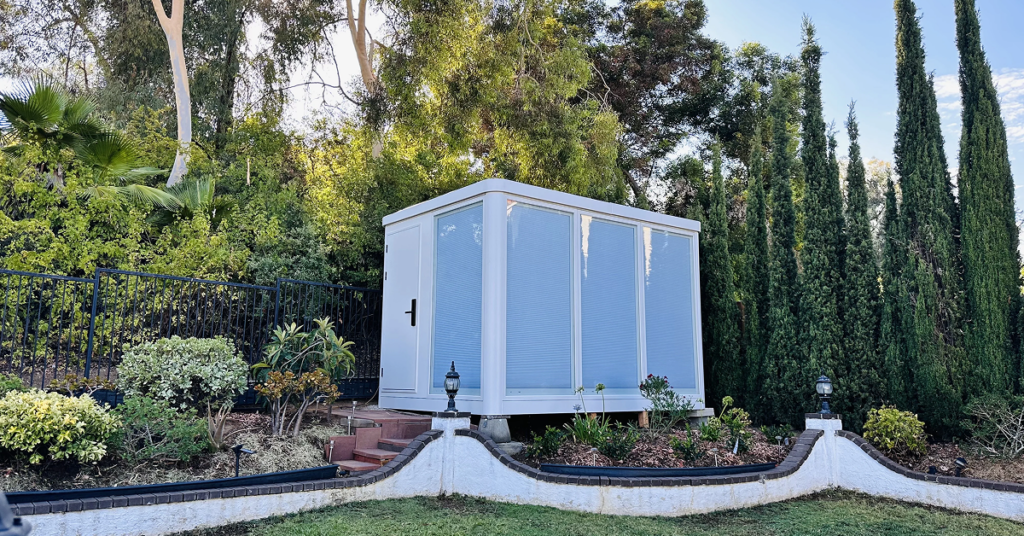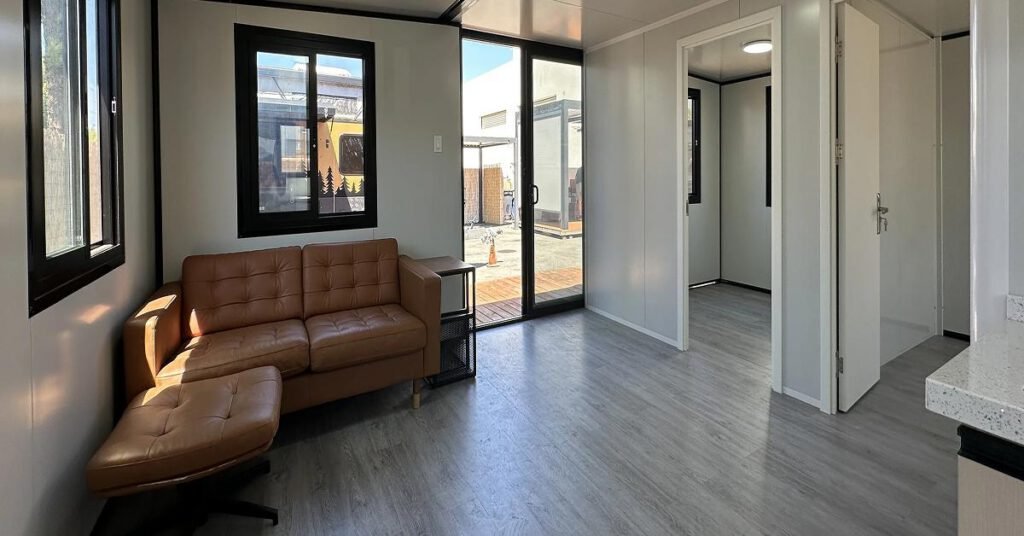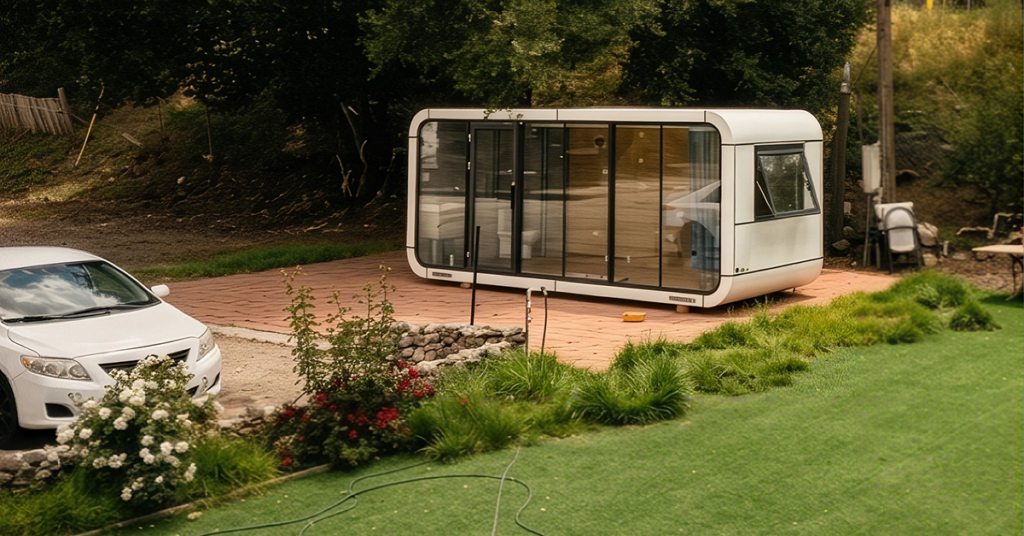

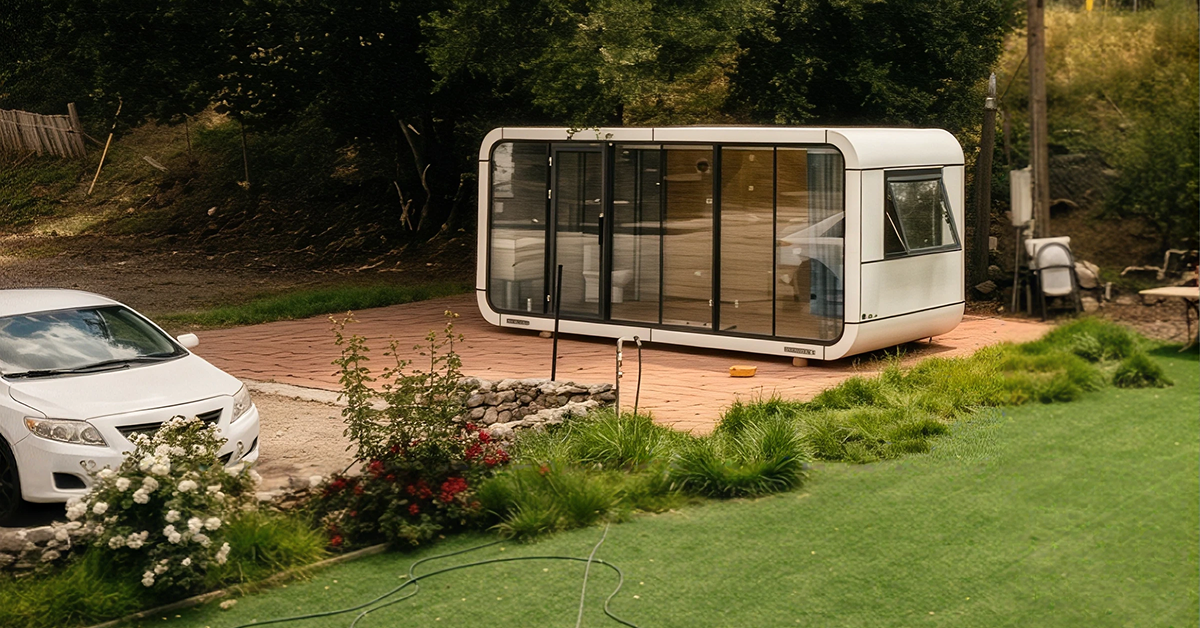
Arizona has made accessory dwelling units easier to develop—but “easier” does not mean “permit-free.”
An attractive prefab unit may arrive ready for its next chapter, but the zoning questions do not roll away with the wheels. Before purchasing or placing an ADU, tiny home, or park model, you need to understand how your property, intended use, and unit classification affect the approval process.
Here is the honest version of how Arizona ADU permits work.
This article provides general educational information, not legal, engineering, zoning, or permitting advice. Always confirm requirements with the authority responsible for your property.
What Is an ADU in Arizona?
Under Arizona law, an accessory dwelling unit is generally a smaller, self-contained living unit located on the same property as a larger single-family home. It includes sleeping and sanitation facilities and may include a kitchen.
Arizona has separate ADU statutes for municipalities and counties:
- A.R.S. § 9-461.18 applies to municipalities with populations greater than 75,000.
- A.R.S. § 11-810.01 establishes ADU requirements for Arizona counties.
These laws generally require covered jurisdictions to allow at least one attached and one detached ADU on qualifying properties where a single-family dwelling is allowed. They also establish a minimum permitted size based on 75% of the main home’s floor area or 1,000 square feet, whichever is less.
That sounds simple. The permit counter, however, still has a few questions.
“Permitted Use” Does Not Mean “No Permit Required”
Under Arizona’s ADU laws, a permitted use can generally move forward without a public hearing, variance, conditional use permit, or special exception. It does not mean that you can skip zoning review, construction plans, building permits, utility approvals, or inspections.
A project may still need to comply with:
- Building and fire codes
- Property setbacks and lot coverage
- Drainage and floodplain regulations
- Emergency vehicle access requirements
- Septic or sewer capacity
- Utility connection standards
- Site-plan requirements
- Private HOA rules or deed restrictions
In other words, Arizona law may open the door—but your property still has to fit through it.
The Most Important Arizona ADU Permit Limitations
1. Your exact jurisdiction controls the process
The first question is not simply, “What are Arizona’s ADU rules?” It is, “Who regulates this parcel?”
A property may be inside an incorporated city or located in an unincorporated county area. That distinction determines which planning department, zoning ordinance, application system, and review process apply.
Start by confirming your parcel number, zoning district, and jurisdiction before choosing a unit.
2. A tiny home is not automatically an ADU
“Tiny home” is a description, not one universal legal classification.
Depending on its construction, chassis, certification, foundation, and intended use, a small unit might be reviewed as:
- A site-built dwelling
- A factory-built building
- A manufactured home
- A park model trailer
- A recreational vehicle
- An accessory structure
- An accessory dwelling unit
The label used in an advertisement does not determine the legal category. The reviewing authority does.
Pima County offers a useful example. Its tiny-house permitting guidance assigns different zoning and building requirements to tiny homes on permanent foundations, chassis-based factory-built units, and mobile trailers.
3. State ADU laws do not erase building and safety rules
Arizona’s municipal and county ADU laws preserve applicable building, fire, public-health, drainage, flood-control, environmental, and safety regulations.
The county law also allows officials to require adequate septic capacity when an ADU cannot connect to sewer service. A great floor plan cannot rescue an undersized septic system.
4. Utility easements can stop a proposed location
Arizona law generally prohibits building an ADU over a current or planned public utility easement unless the property owner receives written consent from the utilities that use or may use the easement.
That makes a parcel map and preliminary site plan valuable early in the process. The perfect backyard location may already belong—at least functionally—to a buried utility line.
5. HOA and private restrictions may still apply
Arizona’s ADU statutes do not eliminate private restrictive covenants. Even when a city or county allows an ADU, an HOA or deed restriction may create additional limitations.
Check the property’s governing documents before investing in plans, site work, or a unit.
6. Some locations are excluded from the state framework
The Arizona ADU statutes contain exceptions for certain properties, including tribal land and some areas near airports or military facilities. Other location-specific rules may also apply.
This is another reason a general “ADUs are legal in Arizona” statement is not enough to establish that your particular project is allowed.
Can a Park Model Be Used as an Arizona ADU?
Sometimes—but not everywhere and not automatically.
A.R.S. § 11-820.03 creates a specific path for park model trailers in qualifying county locations zoned for one dwelling unit per three acres or greater. The statute defines a park model trailer as a unit built on a single chassis, mounted on wheels, and containing between 320 and 400 square feet of interior space when prepared for occupancy.
A qualifying park model must still meet requirements involving:
- A semi-permanent or permanent foundation
- Utility connections
- Drainage and floodplain compliance
- Sanitary sewer or septic disposal
- Applicable zoning standards
- Installation permits and inspections when required
This county statute does not mean every Arizona property can accept a park model as an ADU. Cities may have different ordinances, and even county parcels must satisfy the statute’s zoning and site conditions.
Local and State Permits May Both Be Involved
Some projects require more than one approval track.
The Arizona Department of Housing installation-permit guidance explains the state process for manufactured homes and factory-built buildings. Depending on the unit and jurisdiction, applicants may need local planning and zoning approval before applying for an installation permit.
Who issues or inspects an installation permit can also depend on whether a local jurisdiction has an agreement with the state. The Department maintains information about these arrangements on its Inspection Service Agreement page.
For example, Maricopa County requires a Planning and Zoning Permit for manufactured homes, mobile homes, and factory-built buildings before the applicant seeks the applicable State of Arizona installation permit. County review may involve zoning, drainage, environmental services, flood control, transportation, septic sizing, and utility clearance.
One small building can therefore generate a surprisingly large family of approvals.
A Practical Arizona ADU Permit Checklist
Before purchasing an ADU or prefab tiny home, work through these steps:
1. Identify the property
Collect the address, parcel number, parcel map, zoning designation, and jurisdiction.
2. Define the intended use
Explain whether the unit will be a guest space, office, studio, pool house, long-term living area, rental, or another use. Occupancy and utility connections can change the permit path.
3. Confirm the unit classification
Ask the local planning or building department how it will classify the specific model. Provide dimensions, plans, foundation information, chassis details, and available certification documents.
4. Check placement limitations
Review setbacks, easements, lot coverage, access, grading, drainage, floodplain status, and HOA restrictions.
5. Review utilities and sanitation
Determine how the unit will receive electricity and water and whether it will connect to sewer or septic. Confirm that existing systems have enough capacity.
6. Ask which approvals come first
Some jurisdictions require zoning or site approval before building or state installation applications. Ask for the correct order before submitting.
7. Budget for the entire project
The home itself is only one part of the cost. Site plans, engineering, permit fees, utility work, septic review, foundations, contractors, inspections, and other professional services may be separate.
8. Obtain written approvals before installation
A conversation with an official can be helpful, but issued permits and approved plans are what authorize the work. Do not rely solely on informal assurances.
Arizona ADU Rules Are Improving—But Every Parcel Has Its Own Story
Arizona’s ADU laws have created valuable opportunities for homeowners. Phoenix, for example, now provides an ADU information and standard-plan resource, while Pima County directs applicants through its Development Services and Permit Gateway.
Still, no statewide article can approve a specific backyard. Your city or county must review the property, proposed location, intended use, plans, utilities, and unit classification.
How NextGen Can Help
NextGen can provide permit guidance only.
Where local regulations provide a possible path for the selected Park Home or ADU-style project, NextGen can help you understand the questions to ask, review basic property information, identify a potential permit path, and provide available model materials to support your research.
NextGen does not handle or file the permits for the customer, act as the reviewing authority, or guarantee approval. The property owner is responsible for confirming all requirements, hiring any necessary professionals, submitting applications, paying related costs, and obtaining final approvals from the applicable city, county, HOA, utility provider, state agency, or other authority.
If you are considering a NextGen model, contact us with your property address, parcel information, intended use, and preferred placement. We can help you begin the conversation with clearer questions—and sometimes, that is the most valuable first step.