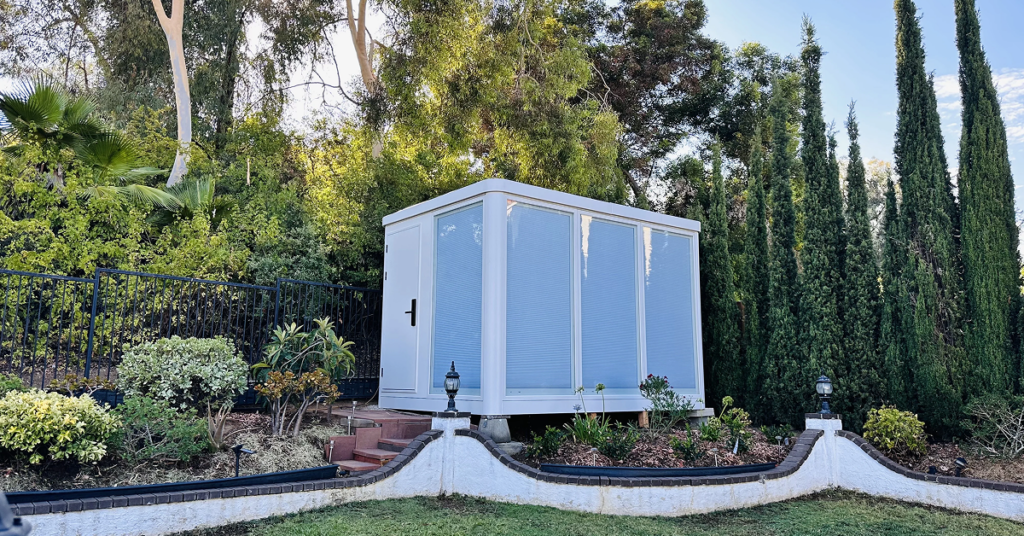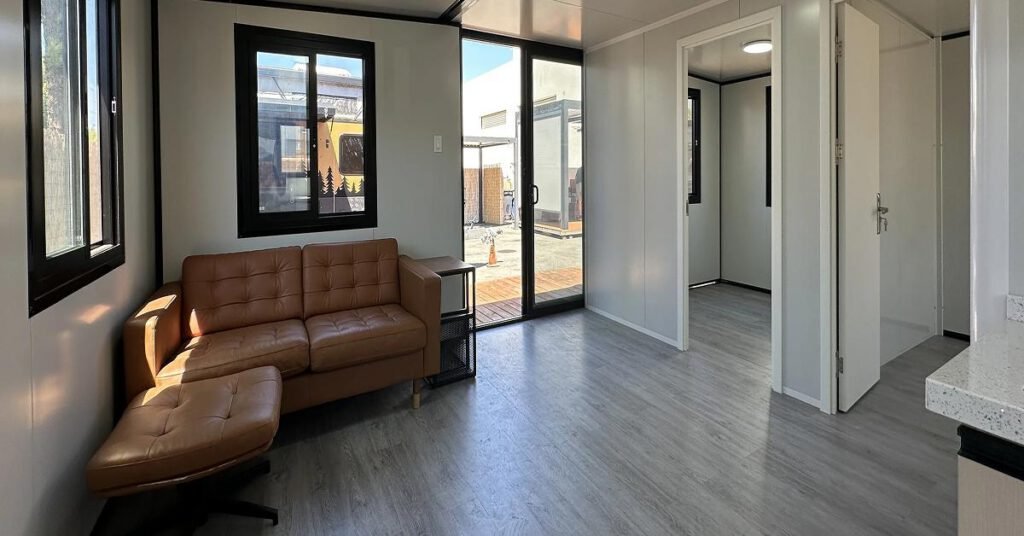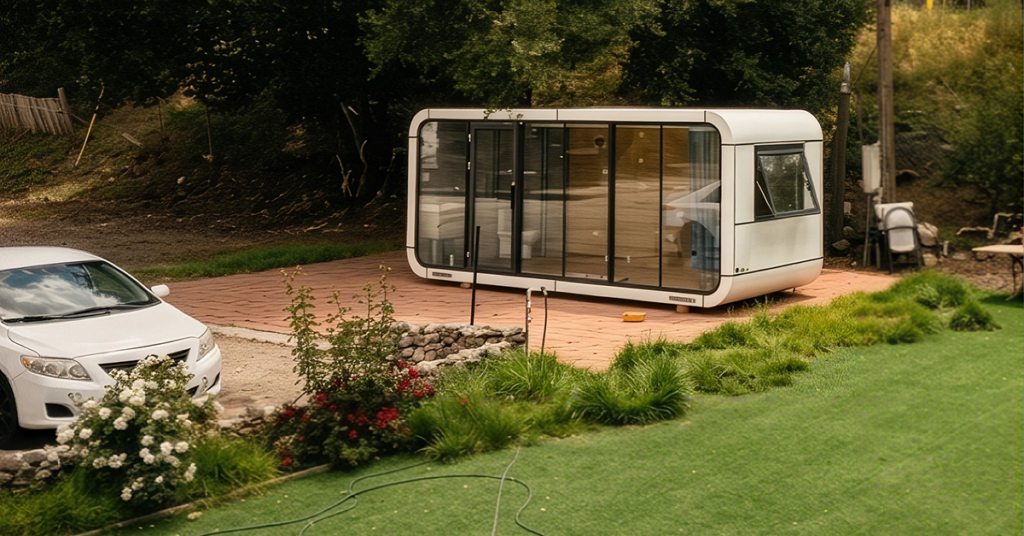

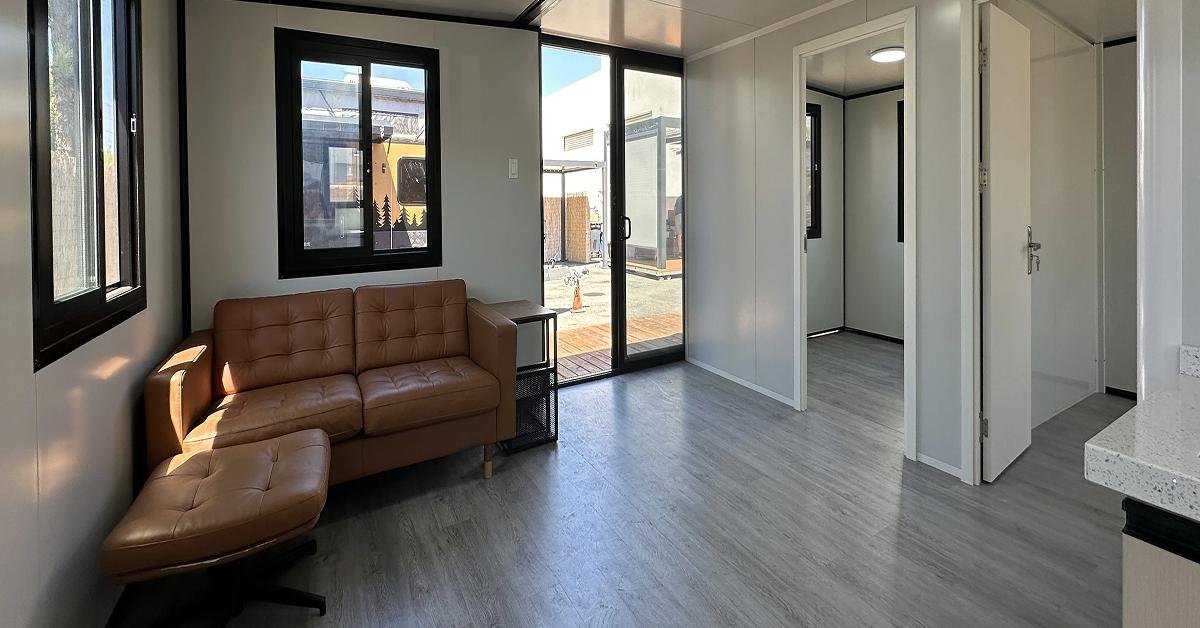
One of the advantages of choosing a NextGen prefab tiny home is that you do not have to design everything from the ground up.
You begin with a thoughtfully pre-designed model—Sierra, Tahoe Mini, Glamis, or Mojave—and then select approved add-ons that better fit your property, intended use, and Arizona lifestyle.
That keeps customization practical and manageable. Here is what you should know before selecting your NextGen add-ons.
Standard Features vs. Optional Add-Ons
Every NextGen model comes with its own factory-included features. Optional add-ons are selected in addition to those standard features.
Some options may be incorporated during the factory process, while others may be provided through NextGen. Compatibility, installation timing, package contents, and pricing can vary by model and project.
NextGen offers customizable prefab tiny homes, but not completely custom homes designed from scratch. Think of the process as choosing a strong starting point and adding approved features that make it work better for you.
Available NextGen Add-Ons
NextGen currently identifies four primary add-on options:
- 10-gallon electric water heater
- One mini-split system
- Winterization package
- Solar package
Here is how to think about each one.
1. Electric Water Heater
The available electric water heater has a 10-gallon capacity. It may be worth considering when your intended setup includes fixtures that require hot water.
Before adding it, ask:
- Which fixtures will use the hot water?
- Is the capacity appropriate for the intended use?
- What electrical and plumbing connections are required?
- Will the property have the necessary water and wastewater service?
- Does the selected model already include related equipment?
A guest space may have different hot-water needs than a backyard office or art studio. The best choice depends on how you plan to use the space—not simply on whether hot water sounds convenient.
2. Mini-Split System
NextGen offers one mini-split system as an available add-on. Temperature control can be especially important in Arizona, where conditions range from intense desert heat to freezing winter temperatures in northern communities.
A mini-split may be particularly useful for a:
- Remote office
- Backyard studio
- Guest space
- She shed
- Man cave
- Pool house
- Other regularly occupied secondary-use space
Ask NextGen about the system’s specifications, model compatibility, electrical requirements, and installation plan. Do not assume every system has the same heating and cooling capabilities.
3. Winterization Package
Arizona is famous for sunshine, but northern Arizona homeowners know that winter is not merely decorative.
If your property experiences freezing temperatures, snow, or extended cold weather, ask about the NextGen winterization package. It may be relevant when planning a unit for Flagstaff, Prescott, the White Mountains, or another colder Arizona location.
Important questions include:
- What components are included?
- Which systems receive added cold-weather protection?
- Are additional site measures required?
- Will exposed plumbing or utility connections need separate protection?
- Is the package compatible with the selected model and intended placement?
A winterization package should not be treated as a promise that every installation is automatically freeze-proof. Site preparation, utility design, installation quality, and local conditions still matter.
4. Solar Package
A solar package can be appealing to customers interested in energy flexibility, sustainability, or properties where conventional power planning deserves extra consideration.
Before choosing solar, clarify:
- What equipment is included?
- Does the package include panels, an inverter, batteries, or other components?
- What is the expected system capacity?
- Is it designed to supplement utility power or support another configuration?
- What site exposure and installation conditions are required?
- Will local permits, utility approval, or professional installation be necessary?
Most importantly, a “solar package” should not automatically be interpreted as a fully off-grid solution. Confirm the exact equipment and intended capabilities during the quote process.
Which Add-Ons Fit Your Intended Use?
The easiest way to choose is to begin with the life you want the space to support.
For a remote office or studio
A mini-split may be a priority for year-round comfort. Solar may also be worth discussing, depending on the property and energy goals.
For a guest space
Climate control and hot-water capacity may be important, depending on the available fixtures and approved use.
For a pool house or recreation space
Consider how often the space will be occupied, whether it will include plumbing, and how it will be used during Arizona’s hottest months.
For a northern Arizona property
Ask about both the mini-split and winterization package. Cold-weather planning should also include the foundation, plumbing, utilities, and site connections.
For an ADU-style project
Review the complete combination of utilities, climate control, water heating, placement, permits, and installation needs. An add-on may improve functionality, but it does not establish that the unit is legally approved as an ADU.
When Should You Select Your Add-Ons?
Add-ons should be discussed after choosing a model and before finalizing the quote and paperwork.
A practical process looks like this:
- Choose your preferred NextGen model.
- Explain your intended use and property conditions.
- Review standard factory-included features.
- Identify compatible add-ons and packages.
- Confirm package contents, pricing, and installation responsibilities.
- Finalize the quote and paperwork.
- Prepare for production, delivery, and installation.
Making these decisions early helps establish a clearer project scope and reduces the chance of discovering an important requirement later.
What Add-Ons Do Not Change
Optional upgrades can improve comfort and functionality, but they do not override property or permit requirements.
Depending on the project, electrical service, water, wastewater, septic capacity, utility connections, foundations, solar equipment, or HVAC installation may require separate planning, professional work, permits, or inspections.
NextGen models should be considered for ADU-style and secondary-use applications such as guest spaces, offices, studios, pool houses, she sheds, or man caves. They should not be assumed to qualify automatically as primary residences.
Final use and placement approval depend on the property and applicable reviewing authorities.
Build the Right NextGen Package
The best add-on package is not necessarily the one with the most features. It is the one that supports how you intend to use your space.
When requesting a quote, be ready to discuss:
- Your preferred model
- Property location
- Intended use
- Expected occupancy
- Available utilities
- Local climate
- Preferred placement
- Permit or HOA considerations
- Delivery and installation needs
NextGen can help you compare the approved options and build a quote around your project’s unique needs.
Contact NextGen Modern Living to explore available models, add-ons, and packages for your Arizona property.